Since it was elected in 2018, the Ford government’s approach to the WSIB has heavily favoured employers, reducing premiums by a cumulative amount of $18.6 billion while paying out employer rebates of $1.5 billion in 2022 and $2.5 billion in 2025.
Recently, a government announcement made it seem that the pendulum was finally swinging towards workers: it promised new legislation that would increase wage loss benefits from 85% to 90% of a worker’s pre-injury earnings, and would loosen the strict age-related cut of benefits to compensate older workers who, but for their injury, would have worked beyond age 65.
But as soon as the text of Bill 105 was published, we saw that the swing toward workers was an illusion.
In exchange for the changes favorable to workers—which, as we will explain, are not all they are cracked up to be—Bill 105 makes fundamental structural changes to the compensation system that will seriously degrade the protection it provides workers, allowing the WSIB to supervise disabled workers’ lives until they reach age 65, and imposing an effective marginal tax rate of 100% on any other benefit or income that a permanently disabled worker has the temerity to receive before they turn 65.
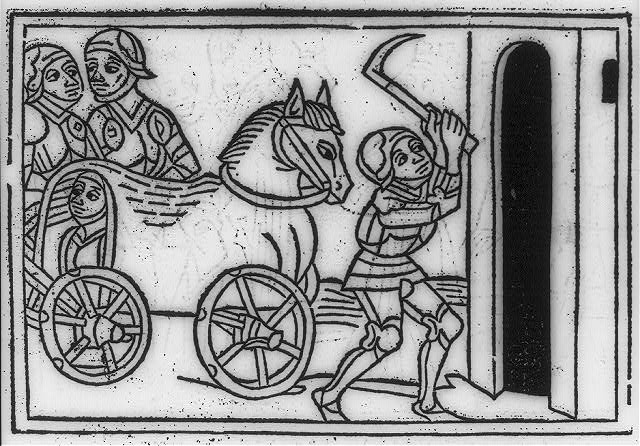
The outside of the Trojan horse
The outside of the Trojan horse is made up of apparently positive changes for workers, which induced some labour groups issue statements supporting the legislation before it was published. Let’s examine those changes now.
The first and best of the two changes is an increase in rate of Loss of Earnings benefits, which are currently set at 85% of a worker’s pre-injury net average earnings. Bill 105 increases the rate to 90%.
But before we applaud the government for its benevolence, we should recall that this change is just restoring benefits to the original level set when the wage-loss system of workers’ compensation came into effect. That reduction happened in 1998, and was imposed to control the unfunded liability, which largely arose from a decade of freezing and reducing of employer premiums, and the “off-balance” of the WSIB’s experience rating schemes.
So, positive as that change may be, Bill 105 is not an amazing step forward for working people, as the government announcement would have us believe. It’s more a situation where a burglar steals your children’s gifts from under the Christmas tree, returns them to you on Christmas day twenty years later, and somehow expects to be celebrated as Santa Claus.
Except it’s worse than that, because Bill 105 doesn’t give back everything that was taken from workers in the first place (for example, the contribution to the retirement benefit was halved in 1998 and not restored by Bill 105). Turns out our burglar returned some of the gifts and kept rest for himself. Merry Christmas.
The second of the two positive changes relates to the age-related cut-off to LOE benefits. Unfortunately, the benefit of this change is largely illusory for workers, and manifestly self-serving for the government.
By way of background, the current Act provides that wage-loss benefits must cease when a worker turns 65 (or, if the worker is 63 years or older on the day of the accident, two years after the accident occurs).
That age cut-off causes significant hardship for low-wage workers, and newcomers to Canada, who don’t have sufficient savings or pension contributions to retire at age-65, and who therefore would, but for their injury, have continued working into their late 6os and 70s. Our current system doesn’t compensate these workers for the true extent of their loss.
But Bill 105 isn’t a meaningful solution to this inequity. It leaves everything important to the discretion of the WSIB in individual cases. We predict that the number of workers who benefit from these changes each year will be counted on the fingers of one hand—while at the same time the government has insulated the legislation from an age-discrimination Charter challenge.
The inside of the Trojan horse
The inside of the Trojan horse—the provisions of Bill 105 that were not announced and came as a nasty surprise to worker groups—are two sets of amendments that degrade the protection that the WSIA provides permanently disabled workers (in other words, the most vulnerable people in our compensation system).
The first is a major structural change: the elimination of the statutory “lock-in” of benefits, to be replaced by regulations that will enable the WSIB to supervise workers right through to age-65.
Under the current Act, the WSIB can review a worker’s wage loss benefits on an annual basis, and whenever it decides there is a “material change” in the worker’s circumstances, during the first six years of a worker’s claim. These reviews can result in a reduction or termination of benefits (for example, if the WSIB decides the worker is now capable of working, or if the worker starts receiving Canada Pension Plan disability benefits). However, the current Act says that the WSIB may NOT conduct such a review if more than 72 months have passed since the date of the accident. We call the 72-month mark the “lock-in date,” and the worker is assured that whatever benefits they are receiving at the time of the lock-in will continue until they reach age-65, indexed for inflation.
The lock-in is an important, original structural component of our current wage-loss system, which replaced life-long permanent disability pensions in 1990. It gives the WSIB and employers plenty of time (six years!) to assist workers with their recovery and vocational rehabilitation (and even allows for a two-year extension if such activities are still happening at the 72-month mark). But, like the PD pension it replaced, the lock-in recognizes that some workers’ injuries leave them with life-changing, life-long disabilities. It protects those workers by finalizing their entitlement under their claim after 72 months, which gives them financial stability, allowing them to plan their lives, knowing that they can rely on receiving a set amount of compensation from the WSIB until they reach age 65. The adjudicative finality relieves them of the psychological stress of being subject to the WSIB’s scrutiny and having to satisfy the demands of WSIB staff in order to maintain their income. In short, the lock-in allows permanently disabled people to move forward with their lives, despite their difficult circumstances.
Bill 105 will strip all that away. It removes the lock-in protection from the legislation, and allows for regulations that would in turn empower the WSIB to conduct both regular reviews (limited only by an undefined “prescribed frequency”) and “material change” reviews (which are entirely unlimited) for years, even decades, after the injury.
Workers will be continuously subjected to the WSIB’s scrutiny and will have to report any changes in their health, or income from other benefits or from working, until they reach age 65. Their benefits could be reduced or terminated by the WSIB as a result of any one of these reviews, all the way to age 65. There will be no finality, and no stability, for permanently disabled workers under the Bill 105 regime.
The second change is a cap on the total amount of income a worker can receive from the WSIB and non-WSIB sources throughout the life of their claim. The cap is set at 100% of the worker’s pre-injury net earnings, and the other sources of income that the WSIB must consider (which will be set by regulation) will include payments made “under another Act or an Act of Canada” and “payments made… by, or on behalf of, the worker’s employer.”
In practice, that means that once the worker’s other income makes up the difference between LOE benefits and their pre-injury net income, their LOE benefits will be reduced dollar for dollar to ensure they receive not a penny more than earned before their injury. That’s effectively a marginal tax rate of 100% (a rate that no wealthy people in this province have ever been subjected to, but which is all too familiar to the Ontarians on ODSP).
The new cap is grossly unfair. It will mean that WSIB benefits, which are supposed to compensate for employment earnings lost as a result of a work injury, could be reduced when an injured worker receives a benefit that is neither employment income nor intended to compensate their injury. For example:
- If a 60-year old worker, to make ends meet, decided to take his CPP retirement benefits or an employment pension early, those payments would be deducted from WSIB benefits—even though pensions are the workers’ savings, and not employment income.
- If a worker were to receive government benefits aimed at assisting with raising children or to affording housing, those payments could be deducted from the WSIB benefits, even though those support programs have other objectives and are not compensation for the workplace injury.
The new cap on income works hand in glove with the removal of the lock-in. The receipt of any new source of income will be considered a “material change” that must be reported to the WSIB, so that benefits can be reduced accordingly, regardless of how many years have gone by since the injury occurred. There can be no getting ahead financially if you were permanently disabled by an accident at work.
The government has offered no public justification for these changes. The sad truth is that they’re another instance of government policy being captured by the owners of capital (employers) to advance their interests over those of ordinary people, fuelling the growth in inequality rather than reducing it. In summary:
- Permanently disabled workers—largely people who are living close to, or in, poverty—will be subject to continuing WSIB scrutiny, and any attempt to better their situation will be met with a reduction of benefits.
- Meanwhile, employers will continue to enjoy their half of the historic bargain (immunity from workers’ lawsuits) at discount prices, with ongoing premium reductions and multi-billion dollar rebates paid to them out of the insurance plan.
It’s not too late to stop this. Call and email your MPP and the Minister of Labour. If you’re in a union, talk to your union reps. Make contact with advocacy groups who are organizing around this, and join in their activities. Take action!